Key Takeaways
• Equipment rental is a production decision, not a last-minute logistics task
• The right partner conducts site visits, prepares technical drawings, and handles compliance — before event day
• Sound, lighting, and rigging each require certified engineers, not just delivery crews
• Book 4 to 8 weeks out; peak season in Dubai runs October through April
• Cross-border events in Saudi Arabia, Qatar, or Oman need customs and compliance planning from the start
• Always confirm on-site standby support is included in the scope, not an optional extra
Dubai consistently hosts some of the region's most demanding productions: international expos, luxury brand activations, government summits, and open-air concerts with tens of thousands of attendees. Venues like Expo City Dubai, the Dubai World Trade Centre, and large outdoor desert sites come with site-specific challenges including load-bearing restrictions, rigging approval processes, and power distribution requirements.
A supplier who simply drops off equipment is not the same as a production partner who understands these constraints. The difference shows up during setup, not after.
What separates a capable rental provider from a basic one is their involvement before the event day - site visits, technical drawings, load calculations, and coordination with venue operations teams. If a company cannot provide these before you sign, that is worth noting.
Good lighting is not just about quantity of fixtures. It is about how a technician programs a rig to tell a story, highlight a stage, and adapt to a live show's rhythm. For UAE events, weather-resistant outdoor fixtures, DMX-controlled consoles, and pixel-mapped LED systems are commonly required. Ask whether the provider includes a lighting designer or just a technician, they are not the same role.
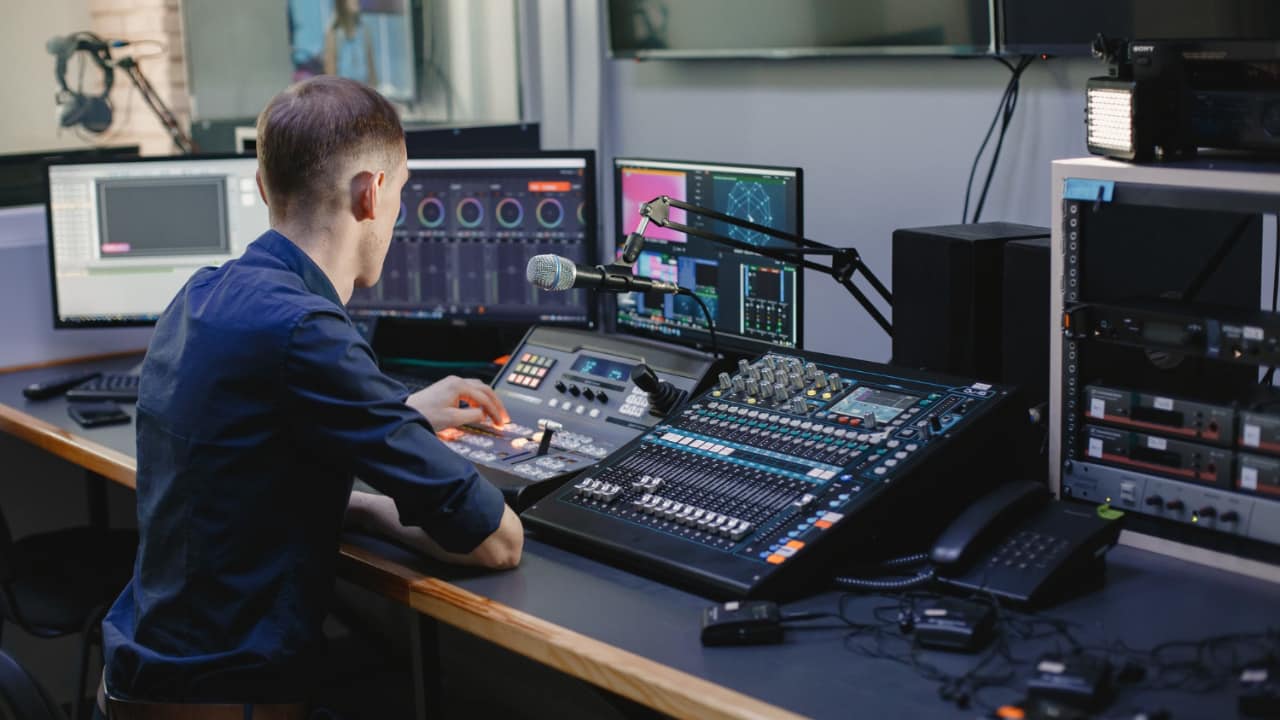
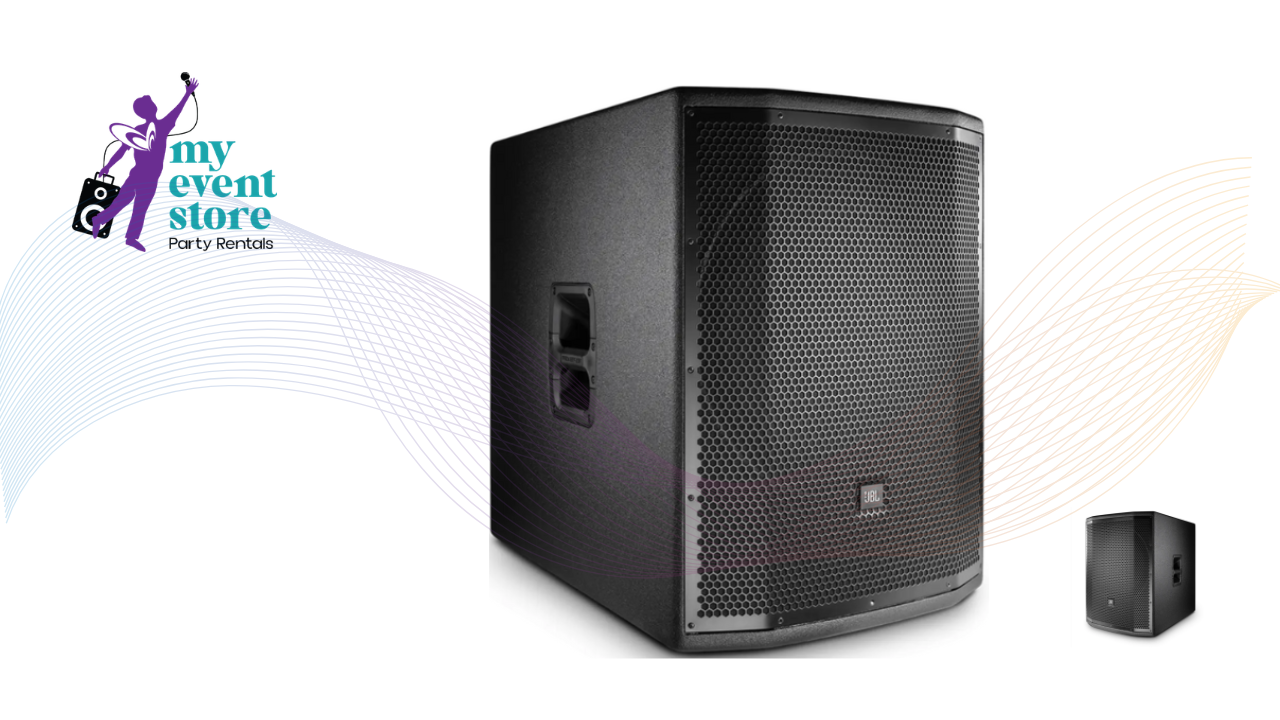
Acoustic behavior varies dramatically between a ballroom, an open desert, and a large convention hall. Line array systems, delay towers for outdoor setups, and digital mixing consoles are standard requirements for professional productions. More importantly, experienced engineers will conduct frequency analysis and sound checks specific to the venue layout. If a rental quote skips over engineering and just lists speaker models, push back.
Staging, Trussing, and Rigging
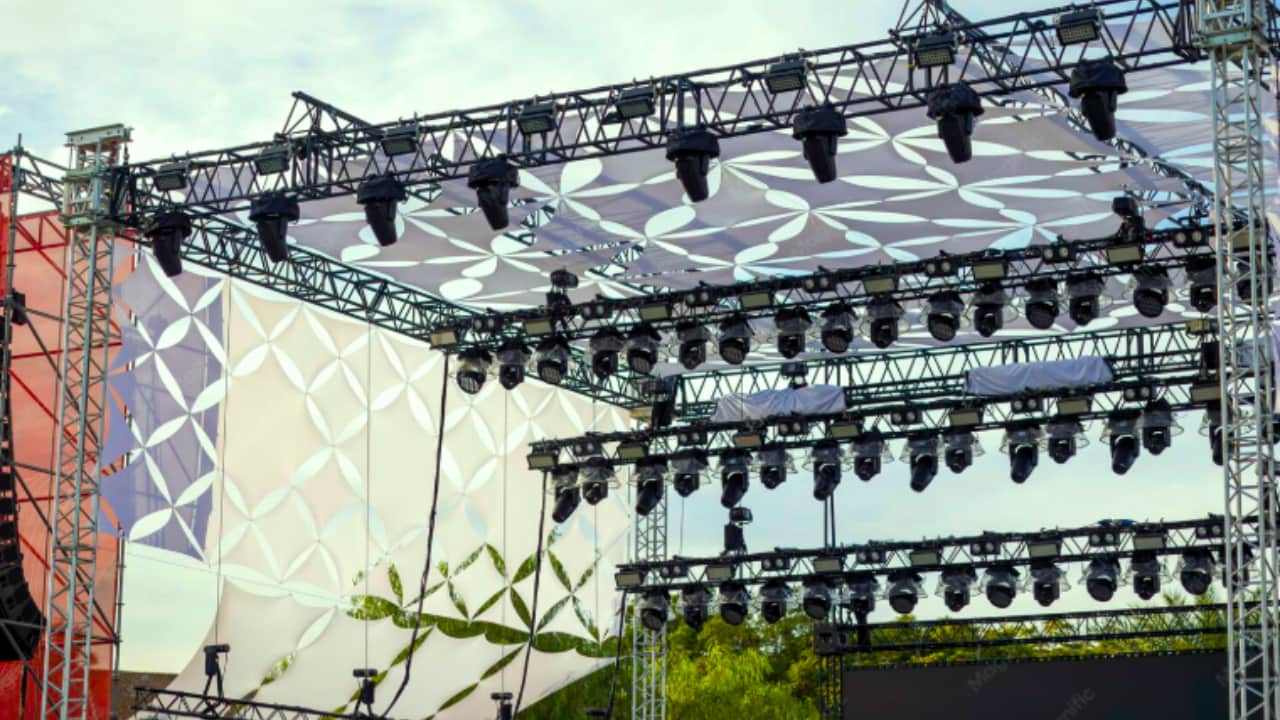
Large-scale events in Dubai often involve suspended LED walls, overhead truss structures, and elaborate stage designs. These require structural safety certificates and rigging approvals that are non-negotiable for government and public venues. A reliable partner will have certified rigging crews and will handle the compliance documentation proactively, not reactively.
LED Screens and Visual Production
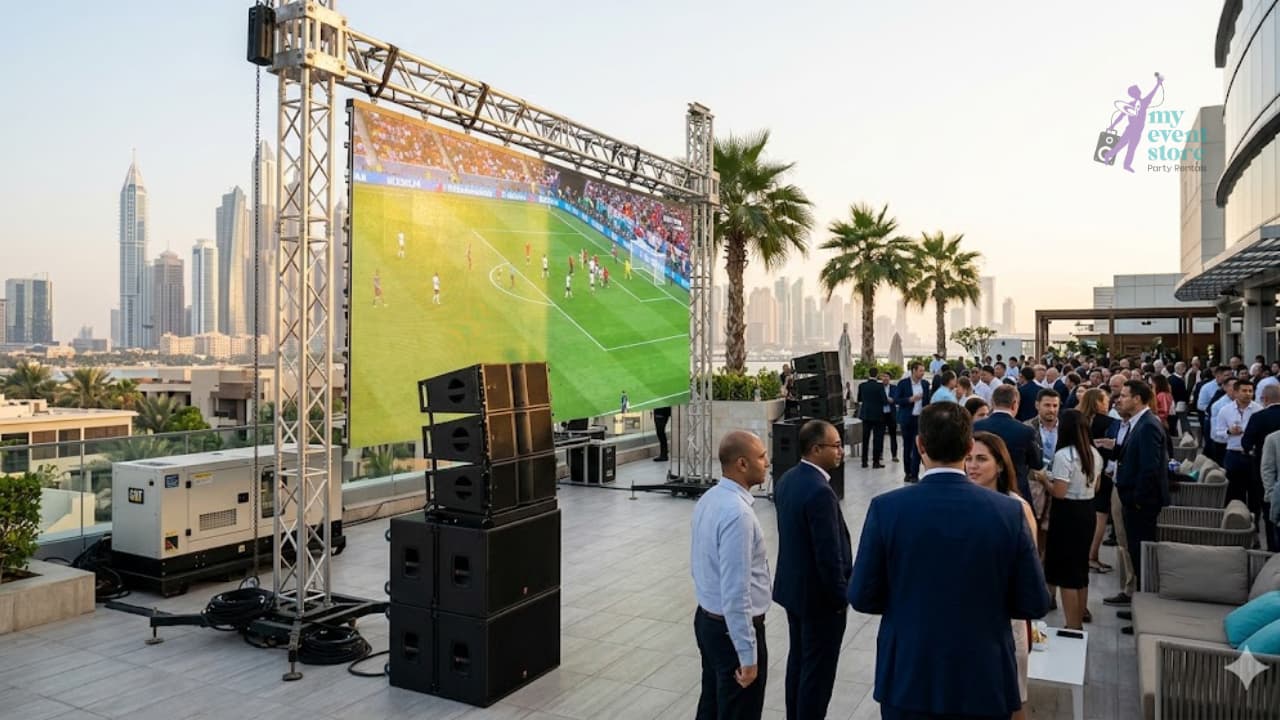
High-resolution LED walls have become standard across corporate events and exhibitions. With hybrid and livestreamed formats now the norm across GCC, AV integration with media servers, video switching, and broadcast-grade cameras is increasingly expected even at mid-scale events.
Décor and Thematic Installations
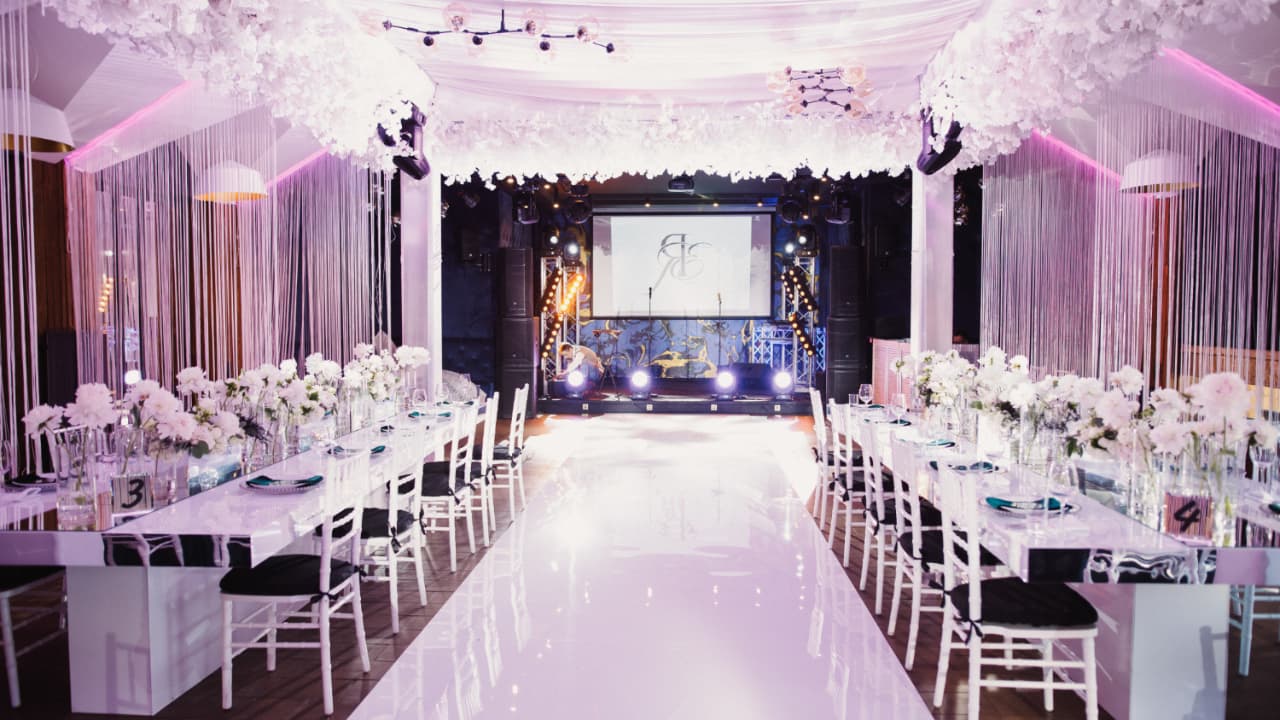
This category often gets underestimated until the final walkthrough. Custom backdrops, branded installations, and VIP setups need to integrate with the lighting and AV plan — not be added on top of it. The best production teams design these elements together.
Technical depth of their team. Are there certified engineers and production managers, or primarily logistics staff? Ask about their in-house capabilities versus what they outsource.
Inventory scale and compatibility. Companies with deep, well-maintained inventory reduce the risk of mismatched or borrowed equipment from multiple vendors. Compatibility across lighting consoles, AV systems, and power distribution matters significantly on the day.
Regional project history. Providers with experience across Dubai, Abu Dhabi, Riyadh, and Doha understand cross-border logistics, customs clearance, and the climate variables that affect outdoor event production in the GCC.
On-site support structure. Who is at your event if something goes wrong at 9 PM? Confirm that standby technicians are included in the scope, not an optional add-on.
For large-scale events, 4 to 8 weeks lead time is the practical minimum. Dubai's peak season runs from October through April, and inventory from reputable providers fills quickly during this period. Corporate and government events tied to fixed calendar dates - GITEX, the UAE National Day period, Dubai Shopping Festival, require even earlier engagement.
If your event involves cross-border movement of equipment into Saudi Arabia, Qatar, or Oman, factor in customs documentation timelines from the start. This is not something to address two weeks before the load-out.
1. What is typically included in a full event production rental package in Dubai?
A comprehensive package generally covers lighting systems, sound equipment, staging, LED screens, power distribution, on-site technicians, transportation, installation, and dismantling. Décor and thematic elements may be included depending on the provider's capabilities.
2. How far in advance should event equipment be booked in the UAE?
For large or complex events, 4 to 8 weeks is recommended. During peak season (October to April), demand is significantly higher and availability tightens faster.
3. Do event equipment rental companies in Dubai provide certified technicians?
Professional providers include certified technicians for lighting programming, sound engineering, and rigging. Always confirm this explicitly. Some suppliers charge separately for on-site support.
4. Can UAE-based rental companies support events in Saudi Arabia or Qatar?
Established providers with GCC operations handle cross-border logistics, including customs clearance and compliance with host-country event regulations. Ask for references from cross-border projects specifically.
5. What safety certifications are required for events at Dubai venues?
Most venues require structural safety certificates for staging and truss, rigging approval documentation, and electrical compliance certification. Government and public venues often have additional requirements that a production-experienced partner will already be familiar with.
6. What questions should I ask a rental company before signing a contract?
Key questions include: Can you provide a technical site visit? Do you carry liability insurance? What is your contingency plan for equipment failure? Who is the dedicated project manager on my event? Can you share references from similar-scale events?
If you are planning an event in Dubai or across the UAE and want to discuss technical requirements, scope, or feasibility for your production, reach out to our team for a consultation.