When an event goes well, most guests never think about the technology behind it. They do not notice the signal flow, the backup microphone, or the timing cue that kept the programme moving. They simply experience an event that feels composed. The speaker is heard. The screen is visible. The room has energy. Nothing jars. Nothing drags.
That is the real value behind audio visual rental in Dubai.
For many organisers, AV is still treated as a shopping list. A screen, a few speakers, some lights, perhaps a lectern mic. But strong event delivery rarely comes from renting equipment in isolation. It comes from designing a system that supports what the event is trying to achieve. In a conference, that may mean intelligibility and pacing. In a product launch, it may mean controlled drama. In a gala dinner, it may mean warmth, speech clarity, and the confidence that the evening will not be interrupted by technical friction.
So when people search for AV rental services, the more useful question is not what can be rented. It is what should be rented for this room, this audience, and this moment.
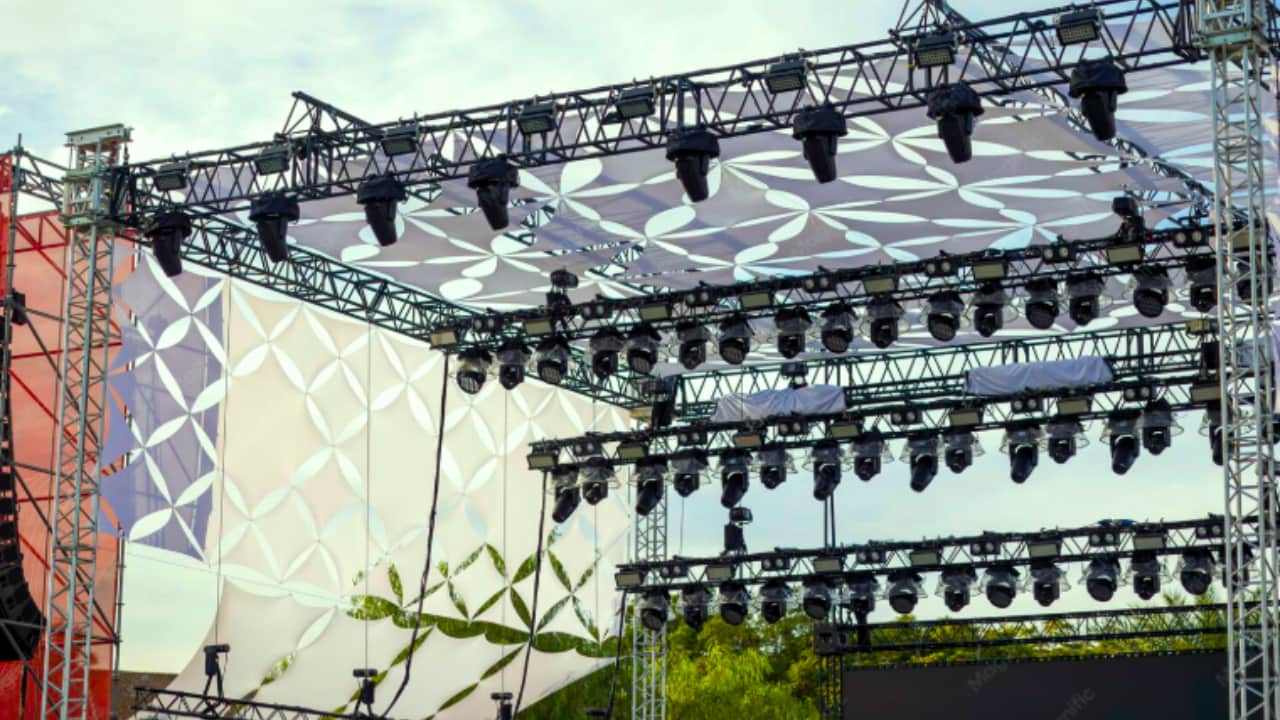
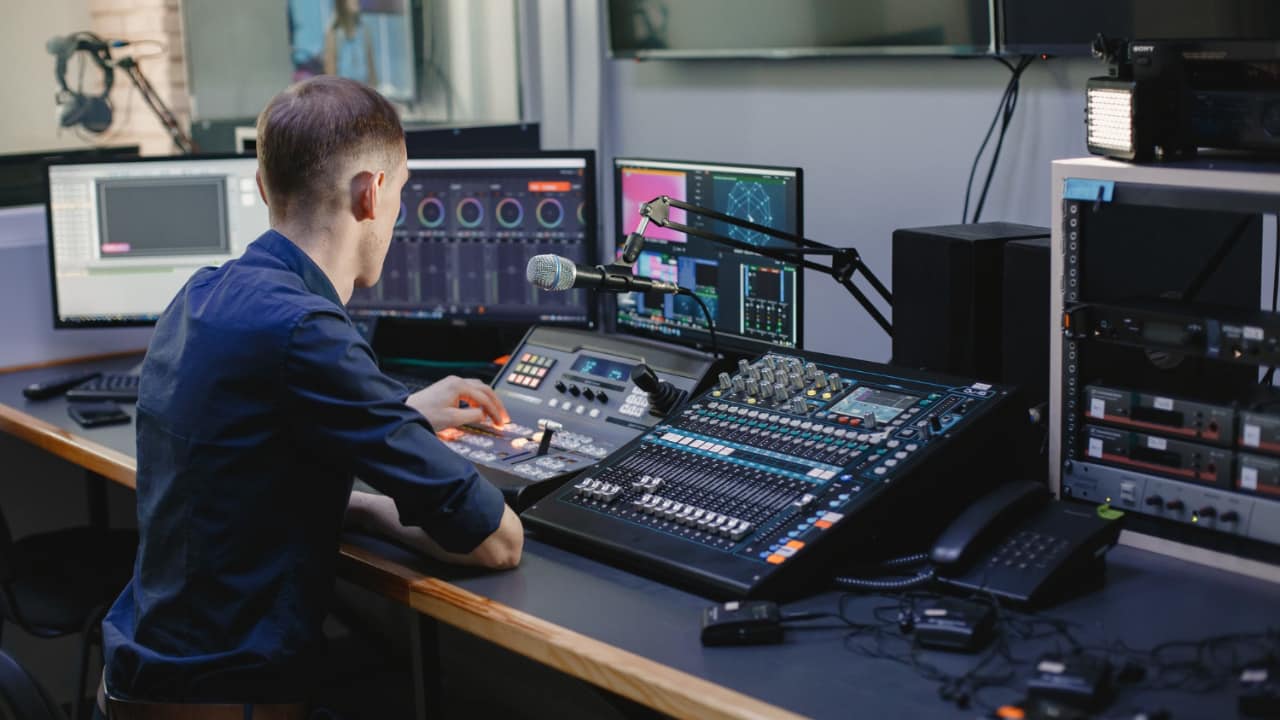
At the practical level, audio visual rental in Dubai covers the technical elements that allow an audience to hear, see, and stay engaged. That often includes sound systems, wireless microphones, LED screens, projectors, display monitors, lighting, staging, trussing, mixers, switchers, and on-site technicians.
But that description is still too narrow.
A credible AV setup is not defined by how much equipment is in the room. It is defined by whether the room works. Can the back row read the presentation without strain? Can a moderator pass smoothly to a panel? Can a keynote speaker move naturally without losing audio quality? Can a brand film feel cinematic instead of flat? Can the schedule stay on track because the technical side is being managed rather than improvised?
The best AV planning answers those questions before show day.
A ballroom and a breakout room should not be built the same way. An investor briefing and a wedding reception should not sound the same way. An indoor product launch and an outdoor brand activation should not rely on the same display logic.
This is where many organisers lose time and money. They start with inventory instead of context.
A better AV planning process begins with five decisions:
That sequence matters. Once those answers are clear, the right equipment is usually easier to define.
In other words, AV rental should never be approached as gear first. It should be approached as communication first.
Conferences and business meetings
For conferences, annual meetings, leadership summits, and internal presentations, AV has one principal job: make the content easy to follow.
That means clear speech reinforcement, readable visuals, controlled stage lighting, and reliable presenter transitions. In most business settings, the AV should feel seamless rather than showy. Speakers should not have to fight the room. Audiences should not have to work to stay with the programme.
A typical conference setup may include lapel microphones, handheld backup microphones, front-of-house speakers, a presentation display system, confidence monitors, stage wash lighting, and technical show control. My Event Store’s current conference checklist content already points in this direction, which makes this broader AV article a useful parent page for that topic cluster.
Launch events demand something more visual. A launch is not just a meeting with branding. It is a staged expression of confidence.
That is where AV rental moves from support function to brand tool. Screen quality matters more. Lighting design matters more. Timing cues matter more. A reveal video that appears too dim, a walk-on that feels mistimed, or a speech that lacks presence can flatten the room in seconds.
For launches, AV should be designed to control attention. Where should the audience look first? What should feel dramatic, and what should feel effortless? These are creative questions, but the answers are technical.
Social events require a different kind of discipline. The room still needs clarity, but not the corporate stiffness that can make an evening feel overproduced.
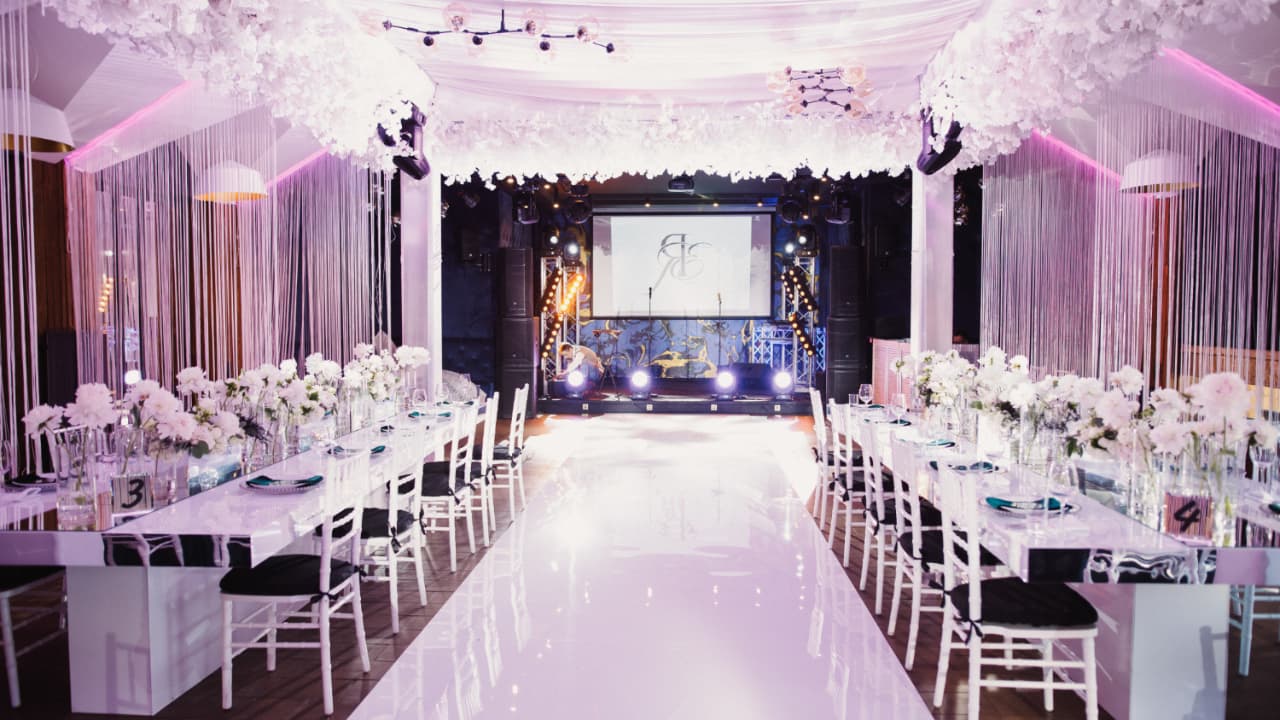
Here, the best AV plan balances speeches, ambient sound, lighting warmth, entertainment needs, and guest comfort. A good setup allows the event to move between moments: arrivals, welcome speeches, dinner service, live music, awards, video playback, and closing atmosphere. It supports the mood instead of interrupting it.
At exhibitions, AV has to work harder in less space. The sound must be controlled. The visual message must land quickly. The booth must attract attention without becoming chaotic.
That often means LED display, directional sound coverage, compact control systems, and lighting that makes the stand look intentional rather than busy.
This is one of the most valuable questions for AEO because users ask it in many forms.
The short answer is simple: choose the display based on visibility, not habit.
A projector is usually suitable when the venue can be darkened, the audience size is modest, and the content is mostly presentation-based. It is practical for seminars, training sessions, and smaller formal gatherings.
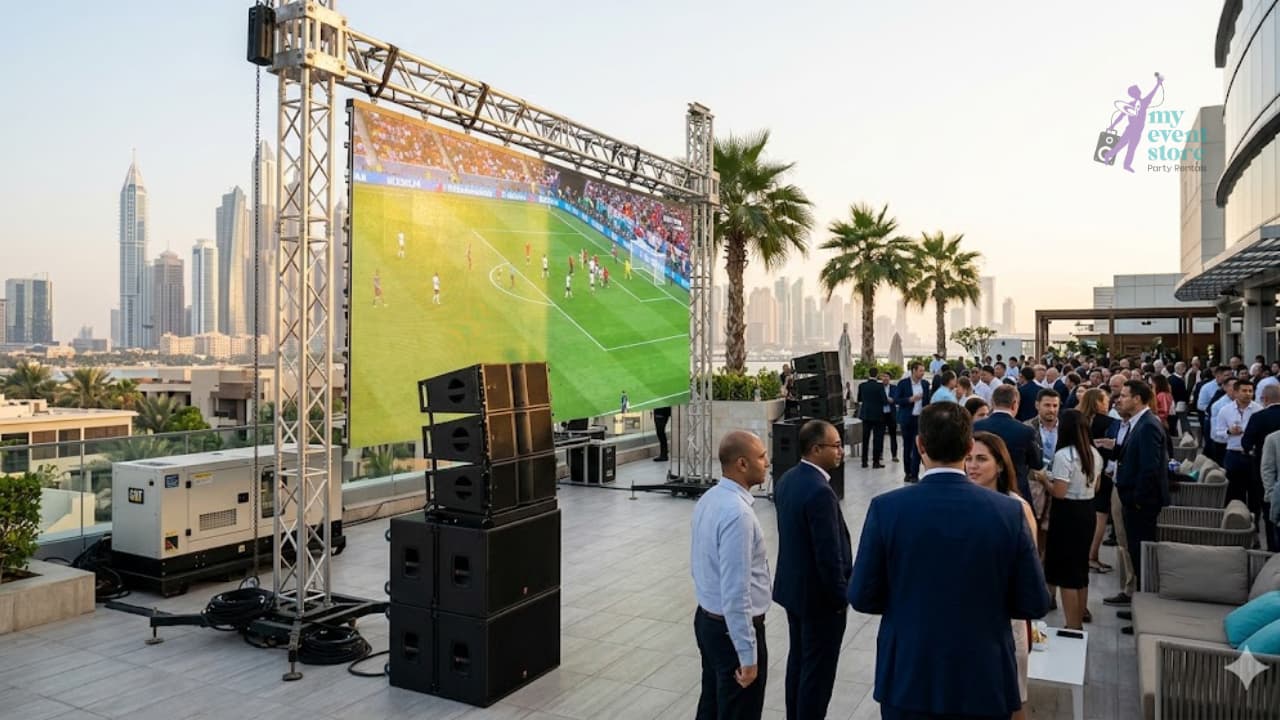
An LED screen is usually the better choice when ambient light is difficult to control, the venue is larger, brand impact matters, or the content includes motion graphics and video. That is one reason My Event Store already has dedicated LED screen content and visual systems pages supporting this broader topic.
Display monitors work well in supporting roles: registration zones, breakout rooms, side-stage confidence monitors, sponsor loops, or exhibition counters.
The point is not which format is trendier. It is which one makes the content easiest to consume in the actual room.
A serious AV brief should be built around decisions, not assumptions.
Not just the headcount on paper, but the actual listening distance, room shape, and whether the event includes panels, Q and A, or roaming presenters.
Slides, videos, branding, live camera feed, product demos, subtitles, or speaker support graphics all place different demands on the visual system.
A seated panel requires a different microphone plan from a keynote speaker walking the stage.
A static speech event can be handled differently from a run-of-show with videos, cues, awards, walk-ons, and remote contributions.
Ceiling height, ambient light, power access, load-in timing, rigging rules, and sightlines all affect the correct AV design.
A reliable AV provider plans for signal failure, extra microphones, laptop changes, and media issues before the audience ever arrives.
These questions do more than improve the quote. They improve the event.
A professional AV partner does not simply send equipment and wait for instructions. They help define the right setup, identify risk points, and manage execution from build to breakdown.
That usually includes:
This is where the difference between a supplier and a partner becomes obvious. A supplier fulfills an order. A partner protects the room.
For a company like My Event Store, which already presents itself as a one-stop event equipment provider with dedicated audio, lighting, and visual categories, that integrated positioning should come through clearly in the article and in the internal linking.
The most common AV mistakes are rarely dramatic. They are usually subtle, but the audience feels them immediately.
These mistakes do not always create disaster. They create doubt. The event feels less assured than it should. And for corporate, brand, and hospitality events in Dubai, that matters.
The best events are not remembered for having more technology. They are remembered for feeling controlled, clear, and credible.
That is why audio visual rental in Dubai should be approached as a planning decision, not a procurement task. The right AV setup does more than make an event audible and visible. It supports timing, protects brand perception, and gives both organisers and guests the confidence that the room is being handled properly.
If you are planning an event in Dubai, the strongest next step is not to ask what equipment is available. It is to ask what the event needs in order to work at the level your audience will expect. My Event Store can support that conversation with a connected approach to audio, visual systems, lighting, staging, and on-site execution that feels thoughtful rather than overbuilt.
Most AV rental packages include speakers, microphones, screens, projectors or LED displays, lighting support, and technical setup. Larger events may also require staging, trussing, switchers, playback control, and live technicians.
Choose based on room conditions and audience visibility. Projectors suit darker, smaller presentation spaces. LED screens are stronger for larger venues, brighter environments, and events where visual impact matters.
For conferences, launches, weddings, and live programmes, yes. Technical support helps manage cues, presenter changes, troubleshooting, and overall show continuity.
Yes, and that is often the cleaner option. Integrated AV support usually reduces coordination gaps and improves execution on event day.
The biggest mistake is choosing equipment before defining the event experience. Audience size, room layout, content type, and programme flow should shape the AV plan first.